
Match the report number, weight and measurements to the stone, check that it says natural, and read the treatment line word for word: for a sapphire worn for Jyotish, Vedic astrology, you are looking for words like “No gemological evidence of heat” or “No indications of heating”. Then notice what the report leaves out, such as origin or clarity, and ask the seller where those came from.
Asking whether a stone is “certified” isn’t enough. A certificate is only as good as the lab that wrote it and the line it prints about treatment, so read the report itself, and buy gems from someone you know to be knowledgeable and trustworthy.
Below is the report for a 3.64 carat blue sapphire in our shop, from AGL (American Gemological Laboratories). It’s a short-form report, which AGL calls a Sapphire Brief.

Line by line
The lab and the document. “AGL sapphire brief”. The name of the laboratory that examined the stone, and the kind of report it issued. An independent lab is not the seller. Read which gemstone certificates you can trust here.
The number. “GB 1118674”. This is the report’s own number. Our stone page for this sapphire lists “AGL, GB 1118674”, so the two match. See the sapphire here.
The date. “26 October 2021”. The day the lab examined the stone. A report describes the stone as it was that day.
Identification. “Natural Sapphire”. The lab found it is a natural sapphire, not a lab-grown one.
Measurements and weight. “9.64 x 8.06 x 5.85mm” and “3.64 cts”. The report number, the weight and the measurements should match the stone and the listing exactly. Ours do: the stone page gives 3.64 ct and 9.64 x 8.06 x 5.85 mm.
Shape and style. “Oval Mixed Cut”. How the stone is cut.
Color. “Blue”. The lab names the color. It doesn’t grade how beautiful it is; that’s for your eyes and ours.
Enhancement, Standard: “No gemological evidence of heat.” This is the line Jyotish buyers are looking for. It means the lab’s tests found no sign that the stone was heated, and it’s what we mean when we call a sapphire unheated.
Enhancement, Additional: “None.” No other treatment was found.
Comments. “Sapphires are commonly heated to modify their color and appearance. Non-heated sapphires are scarce.” The lab’s own note, and it’s true: most sapphires on the market have been heated.
You may read that fine rutile silk inside a sapphire proves it was never heated. Silk can be a good sign, but seeing silk in a photograph doesn’t prove a sapphire is unheated. The treatment line on the report does.
What this report doesn’t say
There is no origin on this card, and no clarity grade. If a seller gives you an origin or a clarity grade that the report doesn’t, ask where it came from.
A second example: a GIA report
GIA reports look different but say the same things. This is the report for a 7.41 carat yellow sapphire in our shop, GIA report 2225834313, dated March 03, 2023. See the yellow sapphire here.
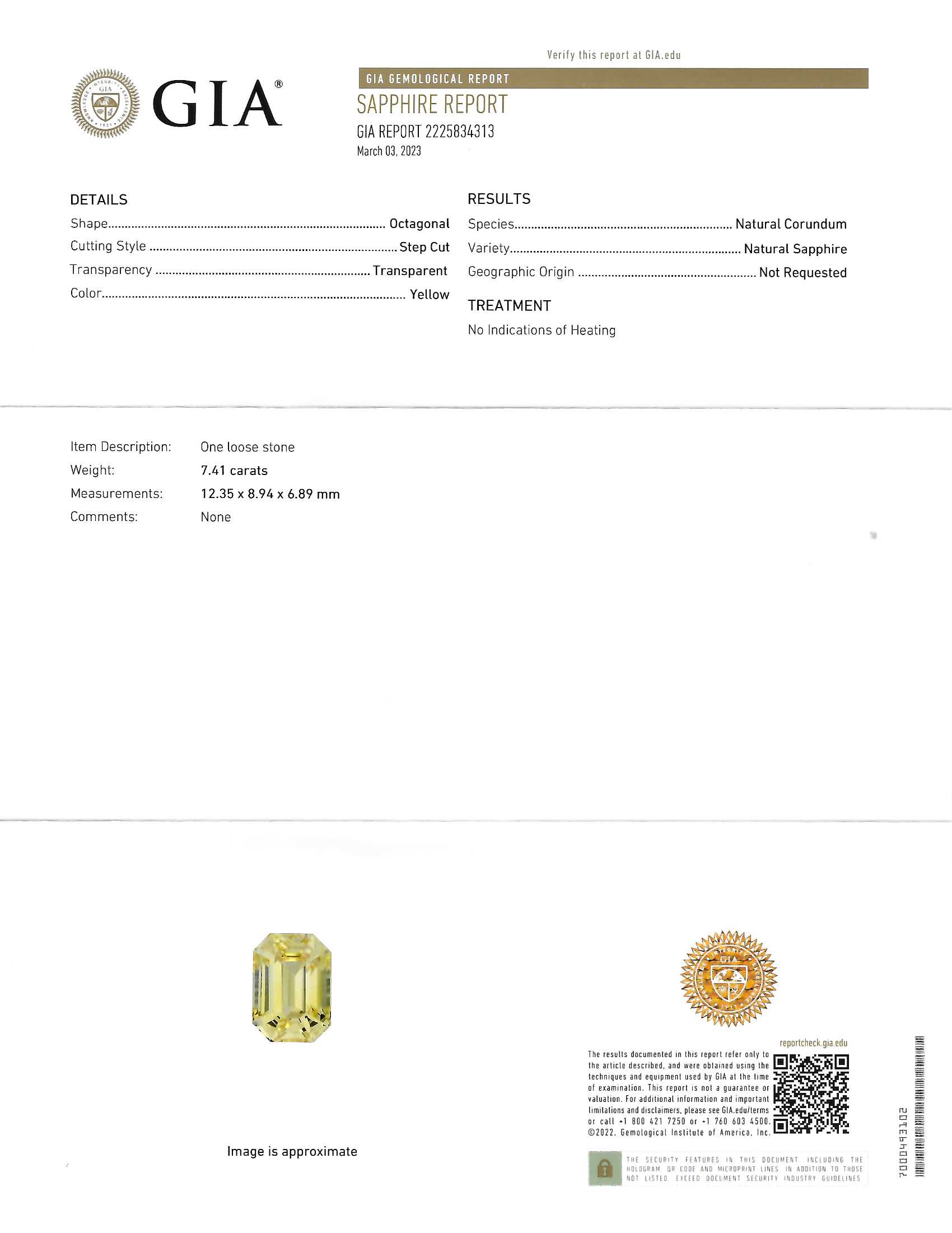
- Species: “Natural Corundum”. Variety: “Natural Sapphire”. Corundum is the mineral; sapphire and ruby are both corundum.
- Treatment: “No Indications of Heating.”
- Geographic Origin: “Not Requested”. Origin is an extra service, and nobody asked for it on this stone.
- Comments: “None.”
- At the top: “Verify this report at GIA.edu”. The QR code at the bottom opens the same report on GIA’s own site, so you can check the paper in your hand is real.
- In the small print: “This report is not a guarantee or valuation.” A lab report describes the stone. It doesn’t say what the stone is worth.
How labs word origin
When a lab does give an origin, it gives it as an opinion. The report for a 2.02 carat ruby in our shop, from C. Dunaigre in Switzerland, reads: “This gemstone shows gemological properties consistent with those of rubies from: Mozambique”. The same report’s comment reads “No indications of heating.” We sell only unheated rubies, and this is the line that shows it. See the ruby here.
Before you buy any stone with a report
- Check that the lab is independent and that you can look it up.
- Match the report number, weight and measurements to the stone and the listing.
- Read the treatment line, word for word.
- Read the comments.
- Notice what the report leaves out, and ask the seller about it.
Read which stones must be unheated for Jyotish here.
Not sure which gem is yours? Start with our Free Gem Report. If you’re ready to buy, order a Personal Consultation to confirm the gem is the right match for you. The consultation fee is credited back with any gemstone purchase over $500.